ARS-Avatar: Animatable and Relightable Surfel Avatars with Learnable Ambient Occlusion

Jiateng Liu1, Hao Gao1, Junxin Sun1, Mengqi Liu1, Jiu-Cheng Xie1, Chi-Man Pun3, Feng Xu2

1Nanjing University of Posts and Telecommunications,
2Tsinghua University,   ·   3Macao University

Arxiv Preprint

ARS-Avatar pipeline overview
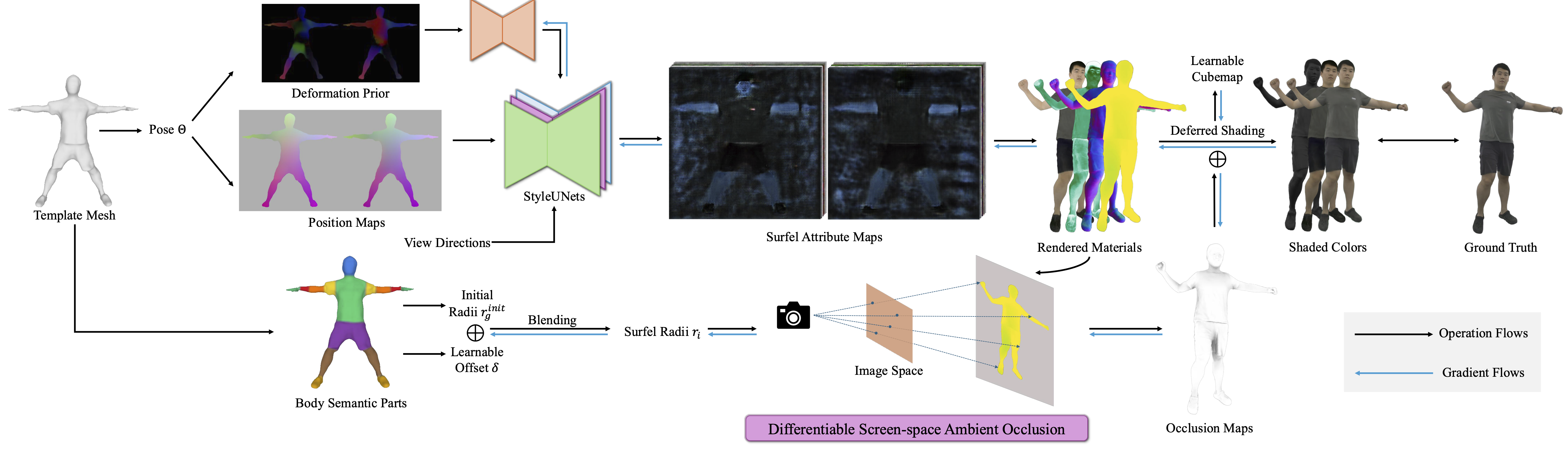
An illustration of our method. Given a canonical template mesh, we first deform it into the observation space under a driving pose Θ to generate position maps and extract deformation prior maps based on deformation priors. Both are fed into multiple StyleUNets to estimate attributes of each surfel. We then employ deferred shading to estimate material properties for relighting under novel illumination. Finally, we introduce a differentiable screen-space ambient occlusion (SSAO) module that efficiently estimates occlusion and enables joint optimization with the avatar representation during training.

Abstract

Creating animatable and relightable human avatars from multi-view images remains challenging, as pose-dependent deformation, materials, and light visibility are tightly coupled in images. In this paper, we present ARS-Avatar, a novel method using surfel representation for high-quality, animatable, and relightable human avatars from multi-view images captured under unknown illumination. We first extract deformation priors from the template mesh and leverage them as additional guidance beyond driving poses, facilitating faithful estimation of surfel attributes. To support relighting, we employ deferred shading to estimate BRDF materials. We further introduce a differentiable screen-space ambient occlusion formulation that enables gradient-based optimization of body-part specific occlusion radii through finite differences, providing an efficient approximation of light visibility that can be jointly optimized with the avatar. Extensive experiments show that ARS-Avatar achieves competitive or improved radiance reconstruction on multiple metrics and consistently outperforms the evaluated PBR relighting baselines, while enabling realistic animation and relighting under novel poses and illuminations.

Interactive Comparison

A
B
— —
A
B
— —

Drag either slider to compare the two sides. Each side can be set to a different actor and map type independently. Arrow keys move a slider once its handle is focused.

Video Results

ActorsHQ Dataset -- Actor01

AvatarReX Dataset -- avatarrex_zxc

AvatarReX Dataset -- avatarrex_zzr

AvatarReX Dataset -- avatarrex_lbn2
Supplementary Images

Original Figures from the Paper (click to expand)
Figure 1
Figure 1: teaser
Figure 2
Figure 2: An illustration of our method
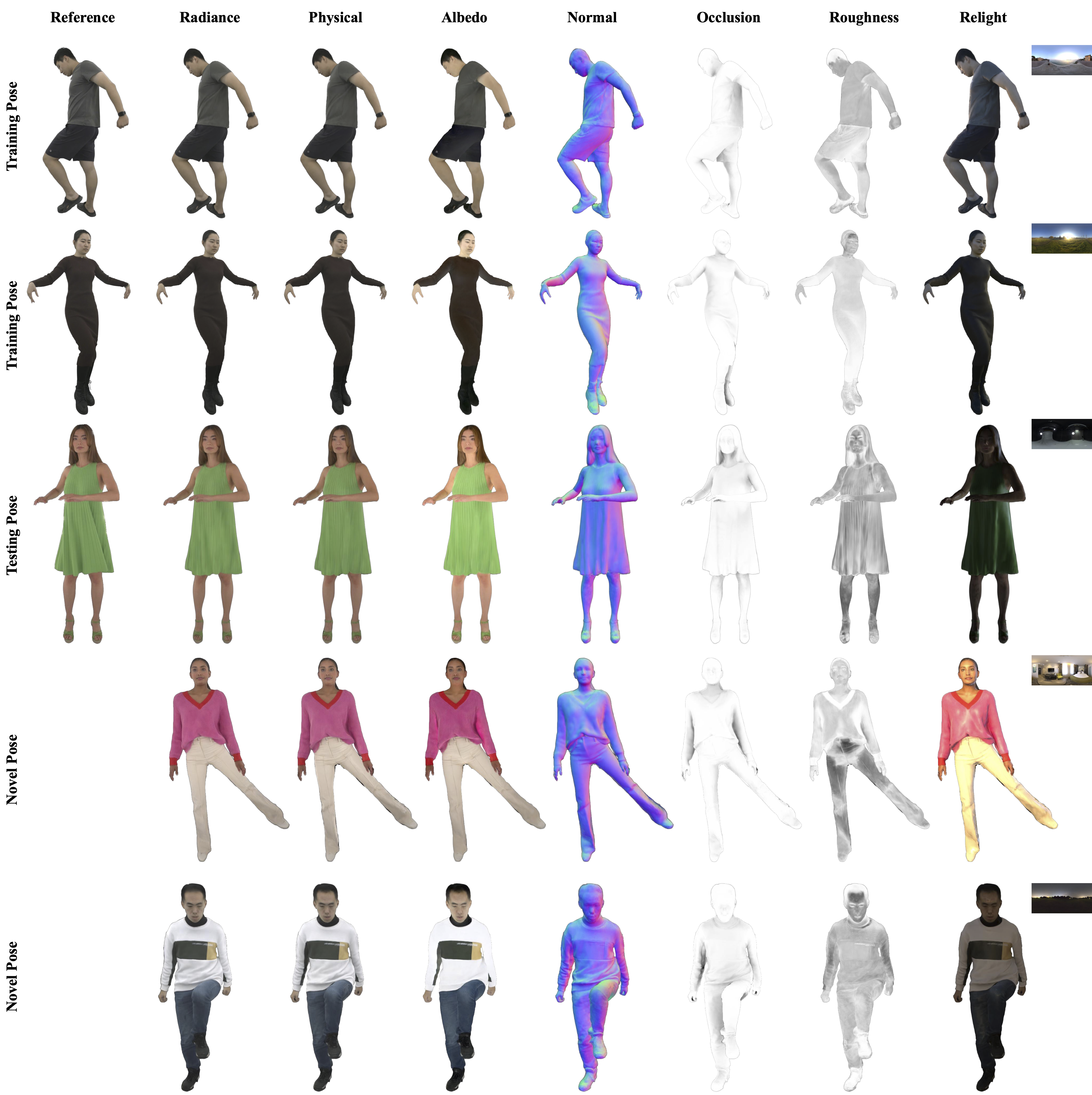
Figure 3
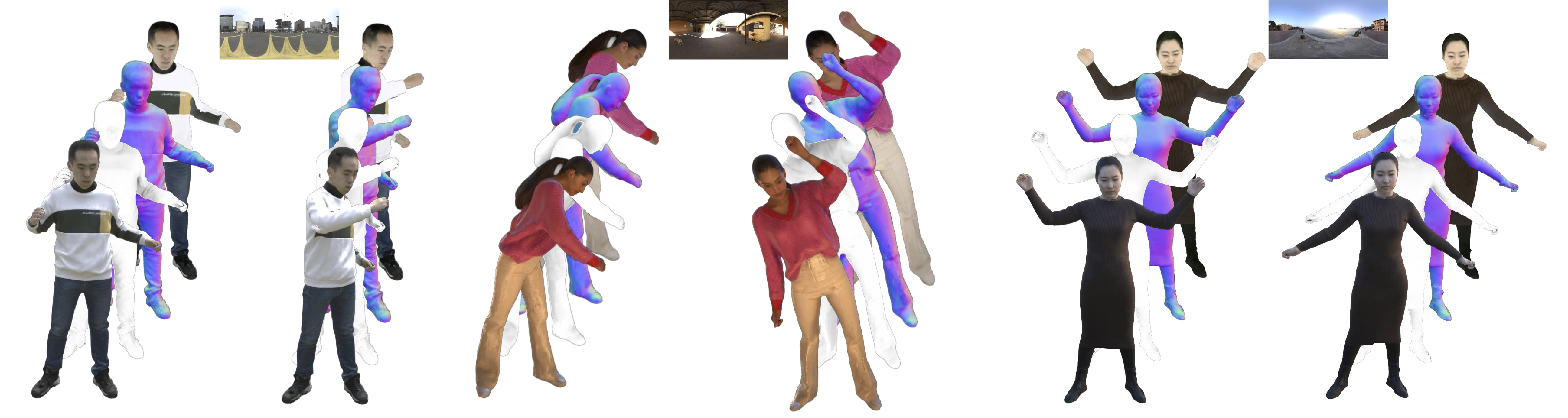
Figure 3: Illustration of appearance and geometry reconstruction, BRDF materials estimation, and relighting synthesis under training and novel poses
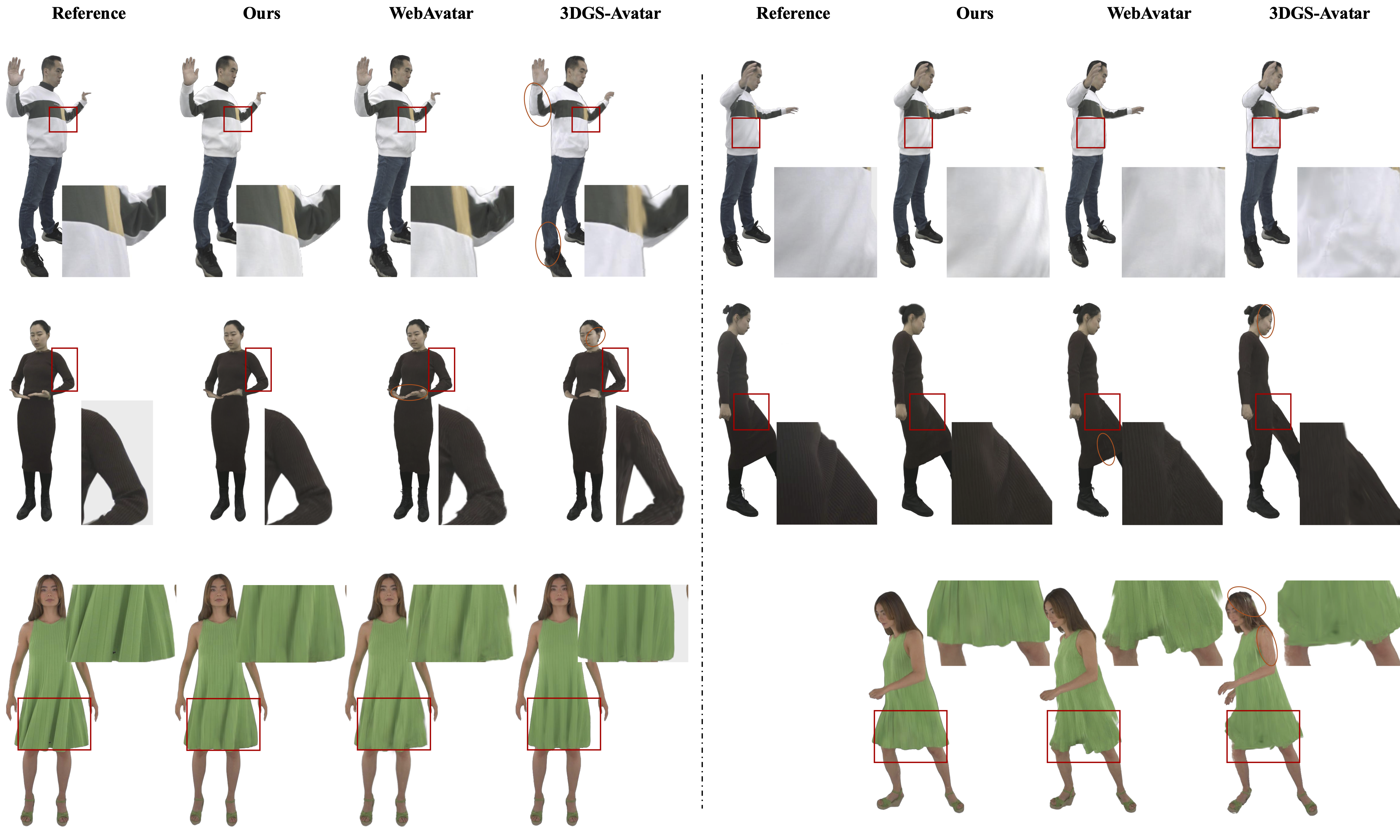
Figure 4
Figure 4: Qualitative Radiance Comparison with state-of-the-art human avatar reconstruction methods including 3DGS-Avatar and WebAvatar under testing and novel poses
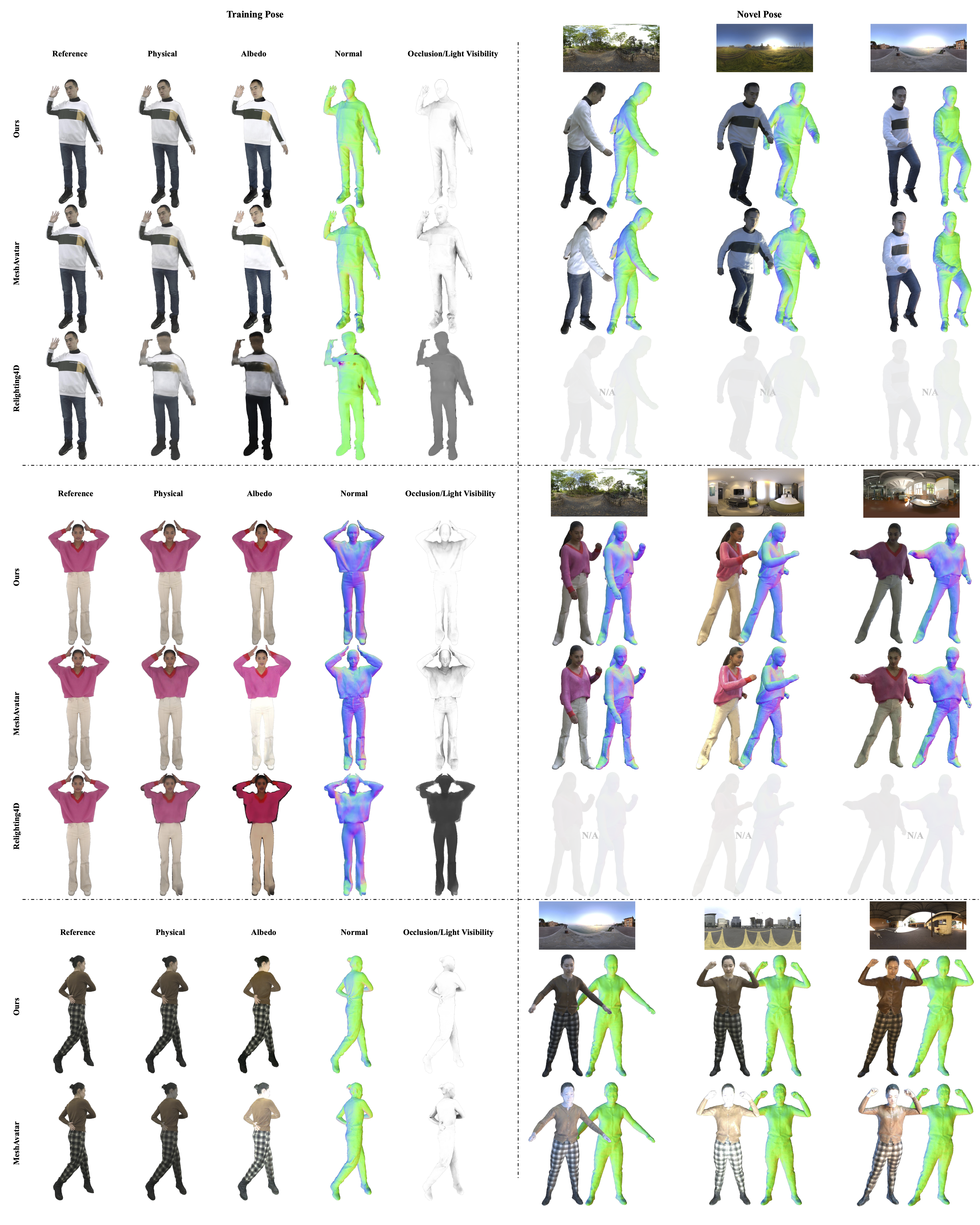
Figure 5
Figure 5: Qualitative Physical Comparison with state-of-the-art human avatar reconstruction and relighting methods including meshavatar and relighting4D under testing and novel poses
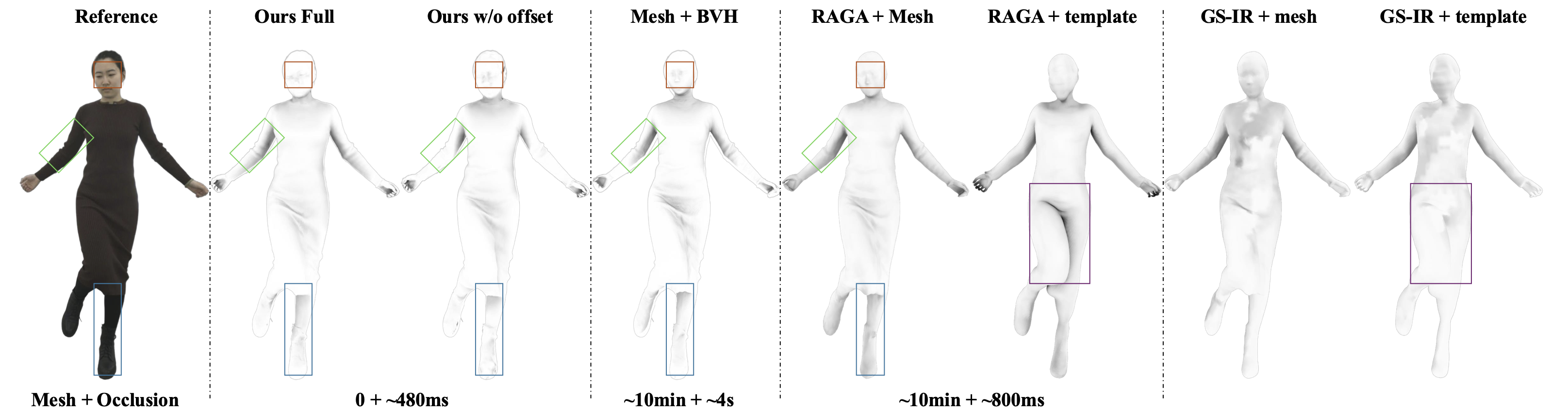
Figure 6
Figure 6: Qualitative Ablation on Differentiable Screen-space Ambient Occlusion
Figure 6
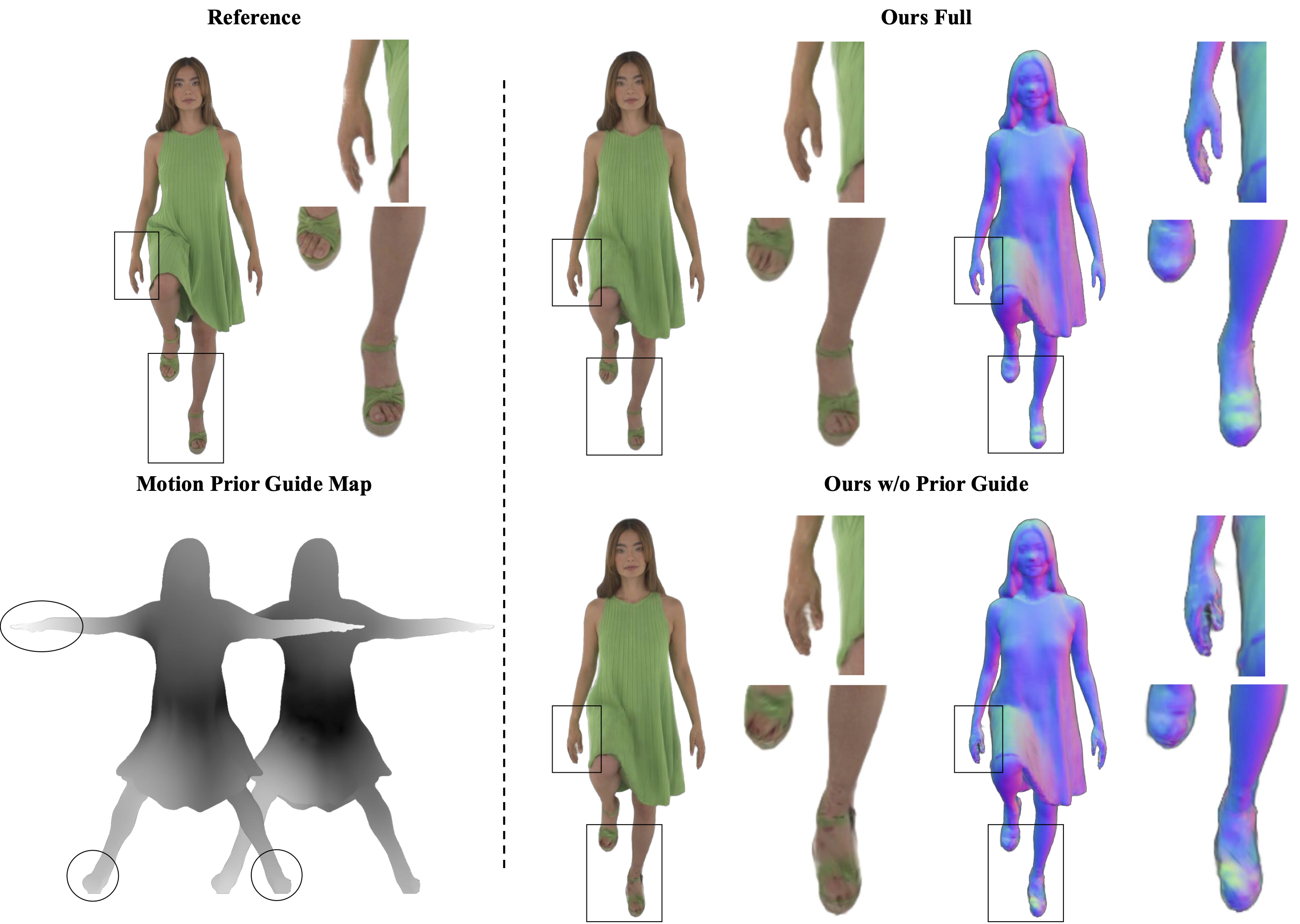
Figure 7: Qualitative Ablation on Deformation Priors
Figure 6
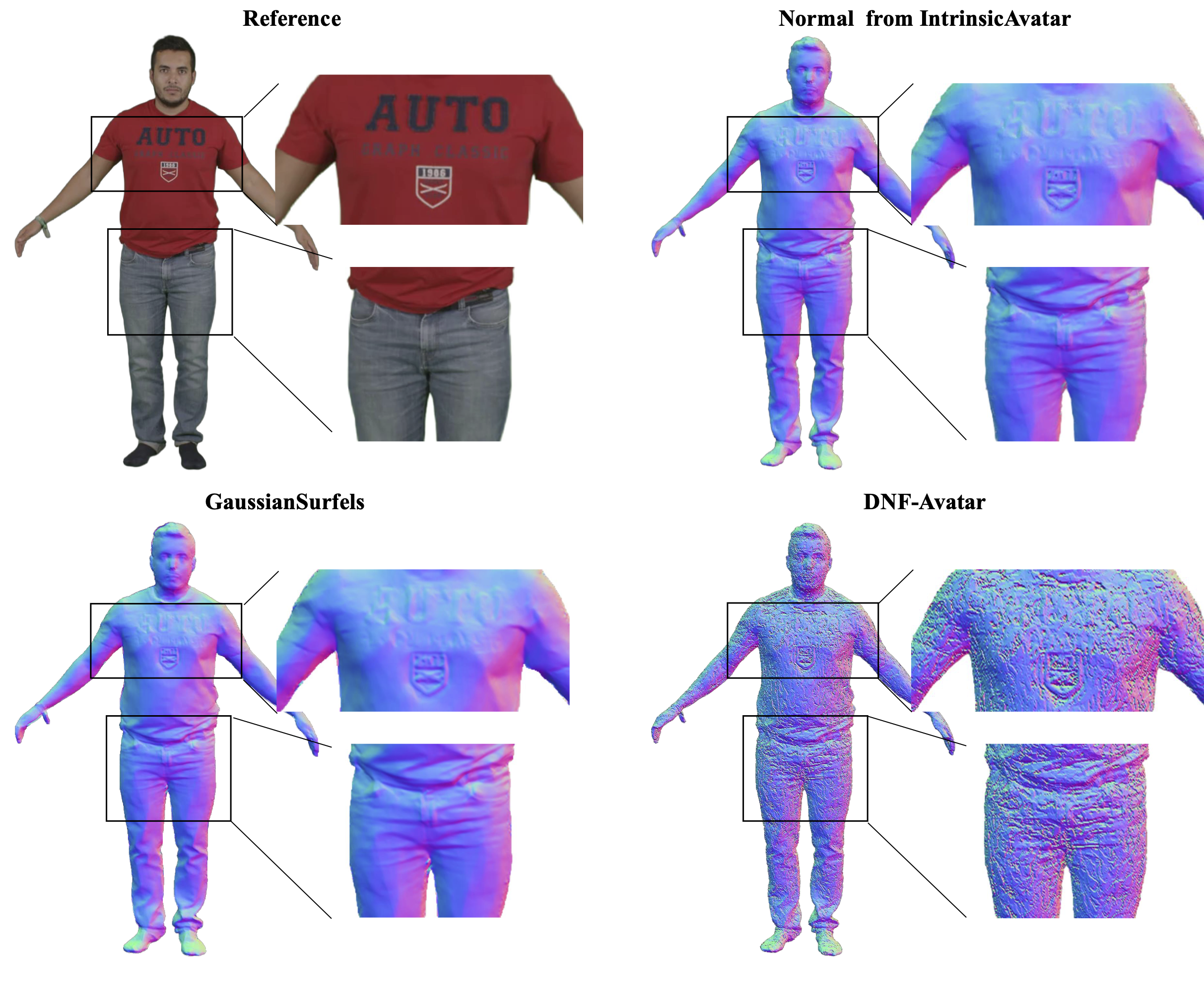
Figure 8: Qualitative Ablation on Surfel Representation

BibTeX

Citation
@article{liu2026ars,
  title={ARS-Avatar: Animatable and Relightable Surfel Avatars with Learnable Ambient Occlusion},
  author={Liu, Jiateng and Gao, Hao and Sun, Junxin and Liu, Mengqi and Xie, Jiu-Cheng and Pun, Chi-Man and Xu, Feng},
  journal={arXiv preprint arXiv:2609.27600},
  year={2026}
}